
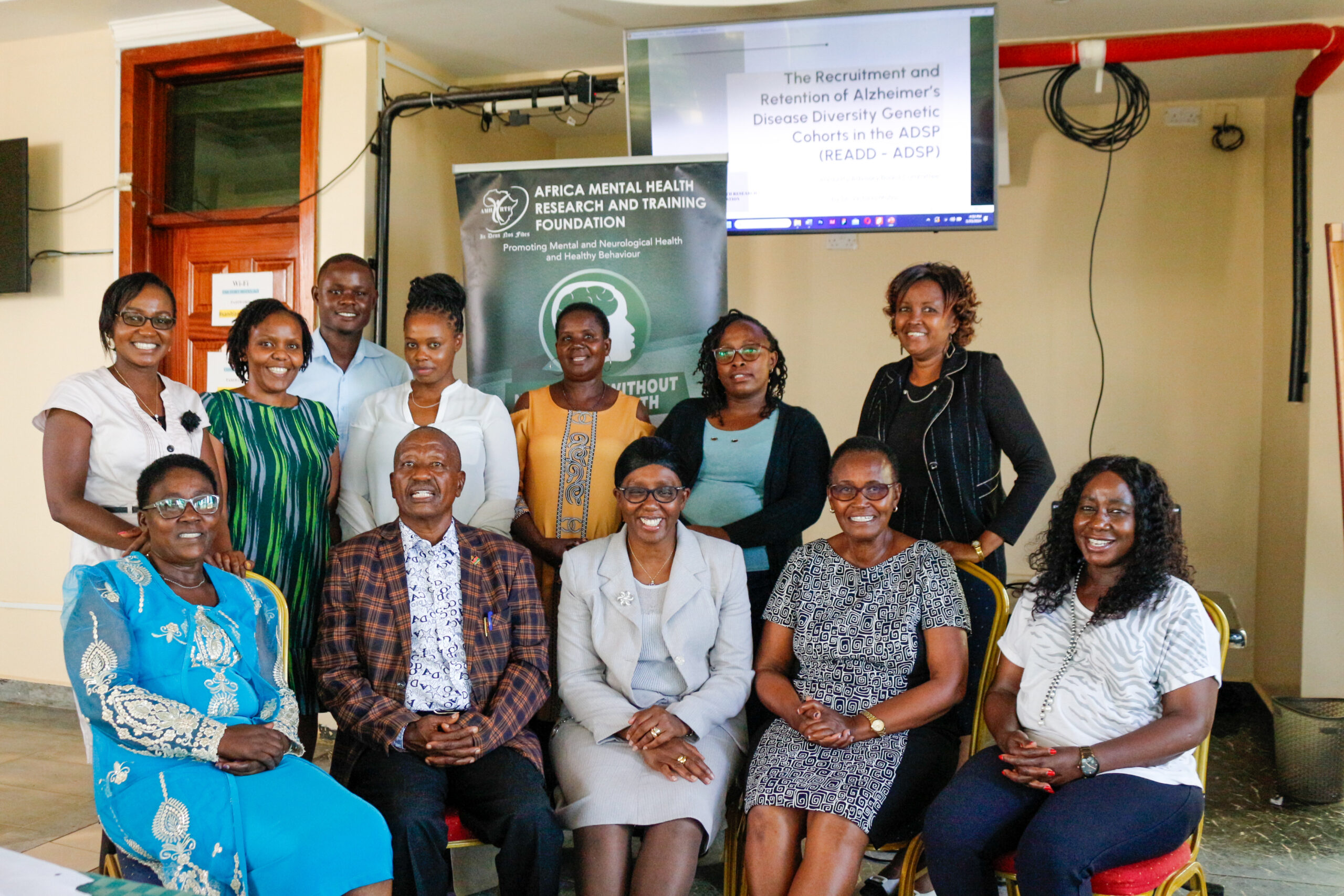
Dr. Victoria Mutiso first spoke about brain donation to a small group of stakeholders gathered for a meeting in Makueni County in 2024. A thoughtful silence followed her question of whether anyone was prepared to donate their brain for dementia research.
“Scientists would learn so much from the brain if they were able to examine it. We are talking about refined diagnostics and finding targeted treatments for the brain,” said Dr Mutiso, who had deployed her sentiments with her usual excitement and poised demeanor.
Hands went up as a section of the audience put up an argument, terming organ donation after death a cultural anomaly; others abstained from sharing their views, perhaps allowing for a learning moment as the rest expressed indifference.
Two years later, the Africa Institute of Mental and Brain Health (AFRIMEB) conducted a small-scale survey in Makueni County to gauge the community’s perspective on brain donation.
“We have completed collecting data on brain donation perception from 360 participants in Mbooni Sub County, Makueni County, and are in the process of preparing the data for analysis,” said Pascalyne Nyamai, study clinician and project officer at AFRIMEB.
The survey is embedded in an ongoing project, READ-ADSP, that is seeking to enhance Alzheimers disease genetic studies in underrepresented African ancestry and Hispanic populations.
Dr Mutiso, a Co-Investigator on the READ-ADSP project, asked this question long before the survey began to gauge how well people understand brain donation for research, how they feel about donating their brain, and whether they would consider doing so to support dementia and other brain research. She also wanted to explore the role of family, including whether relatives would support or oppose a person’s decision to donate their brain for dementia research.
Dementia is an umbrella term for loss of memory, language, problem-solving, and other thinking abilities that are severe enough to interfere with daily life. Alzheimers is the most common cause of dementia.
It is projected that the number of people with dementia will surpass 139 million by 2050, according to Alzheimers Dementia international (ADI). Kenya still lacks a crucial dementia policy, an important framework that would guide how dementia is addressed and managed in the country.
Growing interest
The African continent has a growing interest in brain research, but access to donated human brain tissue remains extremely limited; for example, survey findings involving 1,015 people in Ghana and Nigeria found that only 18.8% said they would be willing to donate their brain after death. Among those unwilling, major reasons included wanting to be buried intact and lack of knowledge about brain donation.
The Ibadan Brain Aging, Dementia And Neurodegeneration (IBADAN) Brain Bank in Nigeria is the first organized brain tissue biorepository in sub-Saharan Africa. According to research papers, it accrues, processes, and stores unique brain tissue for future research into a broad spectrum of neurological and psychiatric disorders.
Most brain tissue biorepositories are established in high-income countries.
Dr Mutiso’s uncommon dedication to dementia care and management shaped her approach to assessing people’s views. Drawing from her experience in dementia research, she recognized how transformative advanced research within African populations could be for disease management and perhaps even eventual elimination.
As a Co-Investigator for READD-ADSP, Dr Mutiso served as a prominent voice for the Kenyan team at national and international scientific conferences, delivering presentations and talks that brought the realities, challenges and advances of Alzheimer’s disease research in Kenya to wider scientific audiences.
She also spoke to the media and publicized dementia research.
In addition, she served as the community engagement lead for the Kenyan READD-ADSP team, representing the Kenyan team in the READD-ADSP Community Engagement Working Group.
Dr Mutiso never saw limitations. She had a near-childlike optimism that things would work out, and she brought that mindset to dementia research. As the world marks World Mental Health Day on October 10, we remember Dr Mutiso, who dedicated her life to dementia research.
